 Virtual tours for remarkable stays
StayPano · Insights & guides
360 Tours for Townhouses and Rentals: Let Tenants Look Before They Book a Visit
Every townhouse has a different layout, so renters need to see the real space first. A 360 tour lets landlords and agents show it before booking a visit.
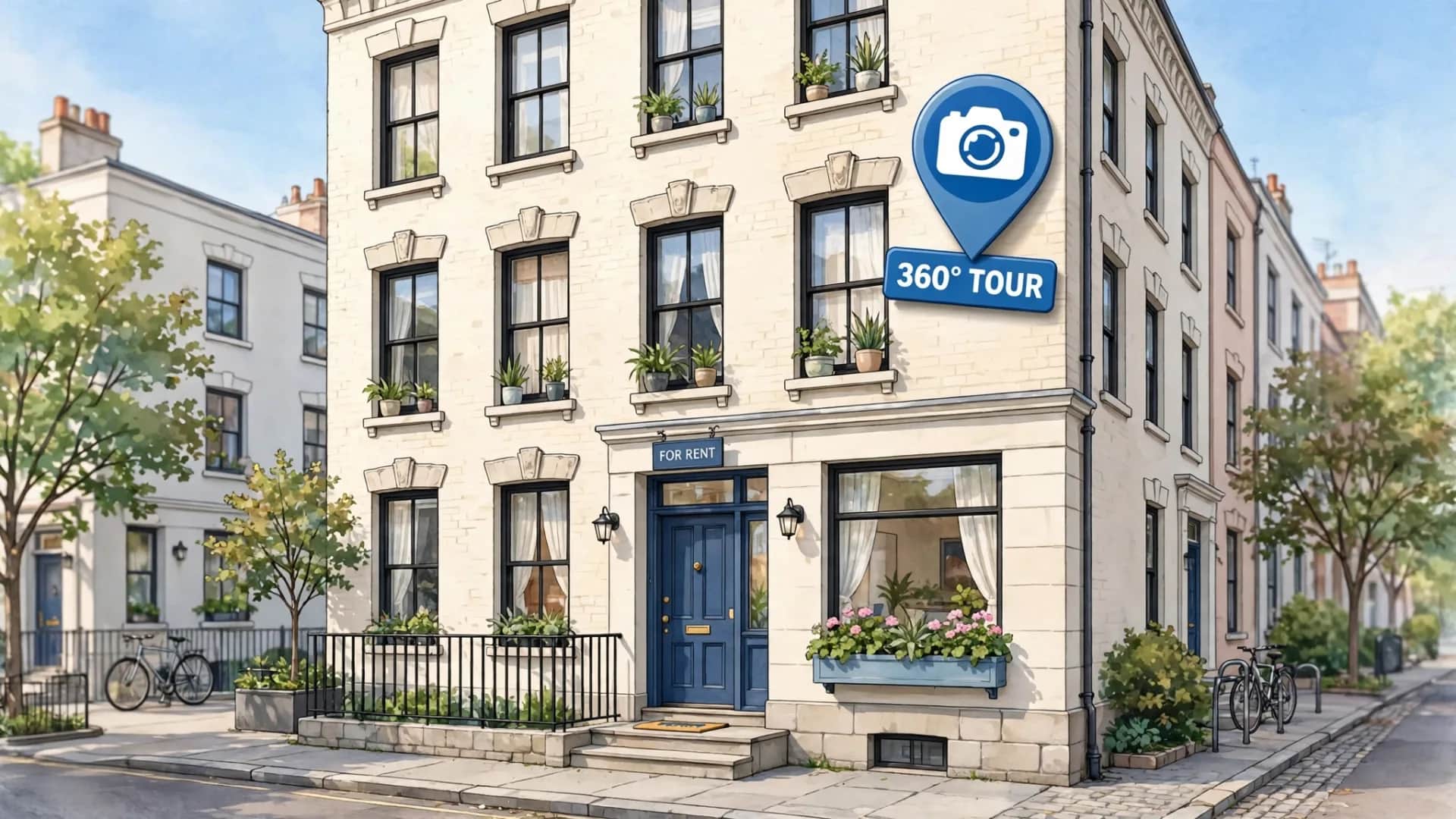
360 Tours for Townhouses and Rentals: Let Tenants Look Before They Book a Visit
"How wide is the alley to the house — can two motorbikes pass each other?", "Is there room in the kitchen for a washing machine?", "Does the bedroom have a window, or is it an enclosed room?" — List a townhouse for rent and the landlord or agent will get a whole series of questions like these. Each person asks about something different, and a few photos are rarely enough for them to picture the real house.
A 360 tour exists for exactly this situation: instead of describing the house in words, you send one link and let renters walk through it themselves before deciding whether to book an in-person visit.
How townhouses and rentals differ from model apartments
Model apartments in one project tend to look alike within each unit type: the same floor plan, the same sample furniture. Townhouses and rental houses are the opposite: every house is different.
One townhouse may be narrow but deep, with a steep staircase and an upstairs bedroom without a window. Another may be wide, with the kitchen at the back and a terrace covered by a metal roof. Two houses with the same floor area and rent can still feel very different to live in — and that feeling only shows up when a renter walks through each space.
Townhouse renters also usually ask about things model-apartment buyers rarely ask: the alley and approach road, parking, a place to dry laundry, room for a washing machine, noise, and whether each bathroom is shared or private. These details are all about daily life, and they are exactly the details that static photos tend to miss — because photographers usually shoot only the prettiest corners.
A 360 tour for a townhouse is not a smaller version of a model-apartment tour — see 360 tours for model apartments in real estate to compare.
How a 360 tour saves landlords and agents repeat viewings
Without a tour, the usual flow goes like this: post a listing with a few photos, answer the same questions over and over in messages, book a visit, and then discover on arrival that the house is not a fit — the alley is narrower than the renter imagined, there is no room for a washing machine in the kitchen, the bedroom has no window.
With a 360 tour, renters look at the house themselves before booking.
1. Renters answer most layout questions on their own. They open the tour, walk from the living room to the kitchen themselves, and see the walkway, windows, and staircase. The questions that remain tend to be shorter and on point: the rent, the lease term, the earliest move-in date.
2. Landlords and agents stop describing the same house over and over. One tour link can be sent to many different renters, each viewing at their own pace.
3. The in-person visit is left for verification, not discovery. Renters who have seen the tour and still book a visit usually already like the layout — they just need to check what a tour cannot fully show: noise, smells, sunlight.
One important note: a 360 tour does not replace an in-person visit. A house is a place where someone will live for months or years — renters still need to visit in person before deciding.
Scene checklist for a townhouse or rental tour
A townhouse tour needs enough scenes for renters to picture the whole house and the way in:
1. Facade and alley / approach road. Shoot the facade from the street so renters can see the gate, the house number, and the width of the frontage. If the house sits in an alley, add a scene at the alley entrance so renters can judge the width, the slope, and how vehicles pass.
2. Living room. Renters will look at how the living room connects to the front door and the kitchen, whether it has windows for light, and how high the ceiling is. Add a short info point stating the floor area per the property documents, the front door direction, and which furniture stays with the rental.
3. Kitchen. For long-term renters, the kitchen is one of the deciding spaces. Renters need to see the cooking area, the sink, room for a fridge, and above all room for a washing machine if there is one.
4. Bedrooms. Each bedroom deserves at least one scene of its own: the front bedroom has a balcony, the back one has no window, the upstairs one is smaller than the downstairs one.
5. Bathrooms. A small space, but renters ask about it a lot: shared or private, water heater or not, ventilation. One scene per bathroom is enough.
6. Terrace and laundry area. If the house has a terrace, include it: renters often use it for drying laundry, growing plants, or as outdoor living space. Show clearly whether it has a roof.
7. Parking. Shoot the parking scene — inside the house, in the front yard, or in a shared neighborhood area — so renters can judge whether there is room for their vehicles.
Place navigation points at the real doors and staircases in the photos, and keep the scene order on the real walking route — from outside in, from the ground floor up.
Show the real condition: do not hide the flaws
This is the most important rule for townhouse tours. Renters who view a tour will come to see the house in person — any flaw hidden in the tour will still be visible on arrival.
Some common flaws that a tour should show honestly:
- Narrow alley, difficult access. Shoot the true width of the alley; do not pick a camera angle that makes it look wider than it is.
- Bedroom without a window. If a bedroom has no window, let the tour show exactly that and say so in the info point.
- Steep staircase, low ceiling, worn walls. These belong to the structure of the house and cannot be fixed by a camera angle.
- Furniture placed only for the shoot. If the furniture in the photos is only there to look good and does not come with the rental, say so in the tour.
Showing the real condition also protects the landlord and the agent: the renters who come to visit already know and accept those points — the visit is a confirmation of what they have already seen.
If someone is still living in the house when the tour is shot, ask them first, tidy away personal belongings, and avoid shooting private items such as documents or family photos.
When should the tour be updated?
A 360 tour is a snapshot of the house at one point in time. When the house changes, the tour should change with it.
- After repairs or renovation. Repainting, replacing furniture, fixing the kitchen or bathroom — any visible change should mean re-shooting the matching scene.
- As the house wears down over time. A rental house through many tenants can wear down: stained walls, scratched floors, aging appliances.
- When the included furniture layout changes. Adding or removing furniture that comes with the rental means updating the info points, and re-shooting the scene if the room layout has clearly changed.
- When the house is rented, hide or remove the tour. A tour of a house that already has a tenant should no longer be public.
For the general review rhythm, see how often should you update your 360 tour?.
FAQ
Does a 360 tour replace an in-person house visit? No. A tour helps renters preview and rule out houses that are clearly not a fit, but before deciding to rent, they should still visit in person.
Can I build a tour without 360 photos? Not yet. A tour is built from an existing set of 360 photos — you need a photo set covering all the scenes in the checklist above. See how much does a 360 tour cost? How to read a quote.
Have a townhouse for rent and want tenants to look before they visit? Send your existing 360 photo set via Zalo — StayPano will check the quality for free and advise on the number of scenes needed.
💬 Message Zalo for a townhouse 360 tour consultation
Read next: 360 tours for model apartments in real estate · How often should you update your 360 tour?