 Virtual tours for remarkable stays
StayPano · Insights & guides
How much does a 360 tour cost? How to read a quote
What drives 360 tour pricing? We break down 5 cost factors, 3 common quote models, and a 5-question checklist to ask before commissioning a tour.
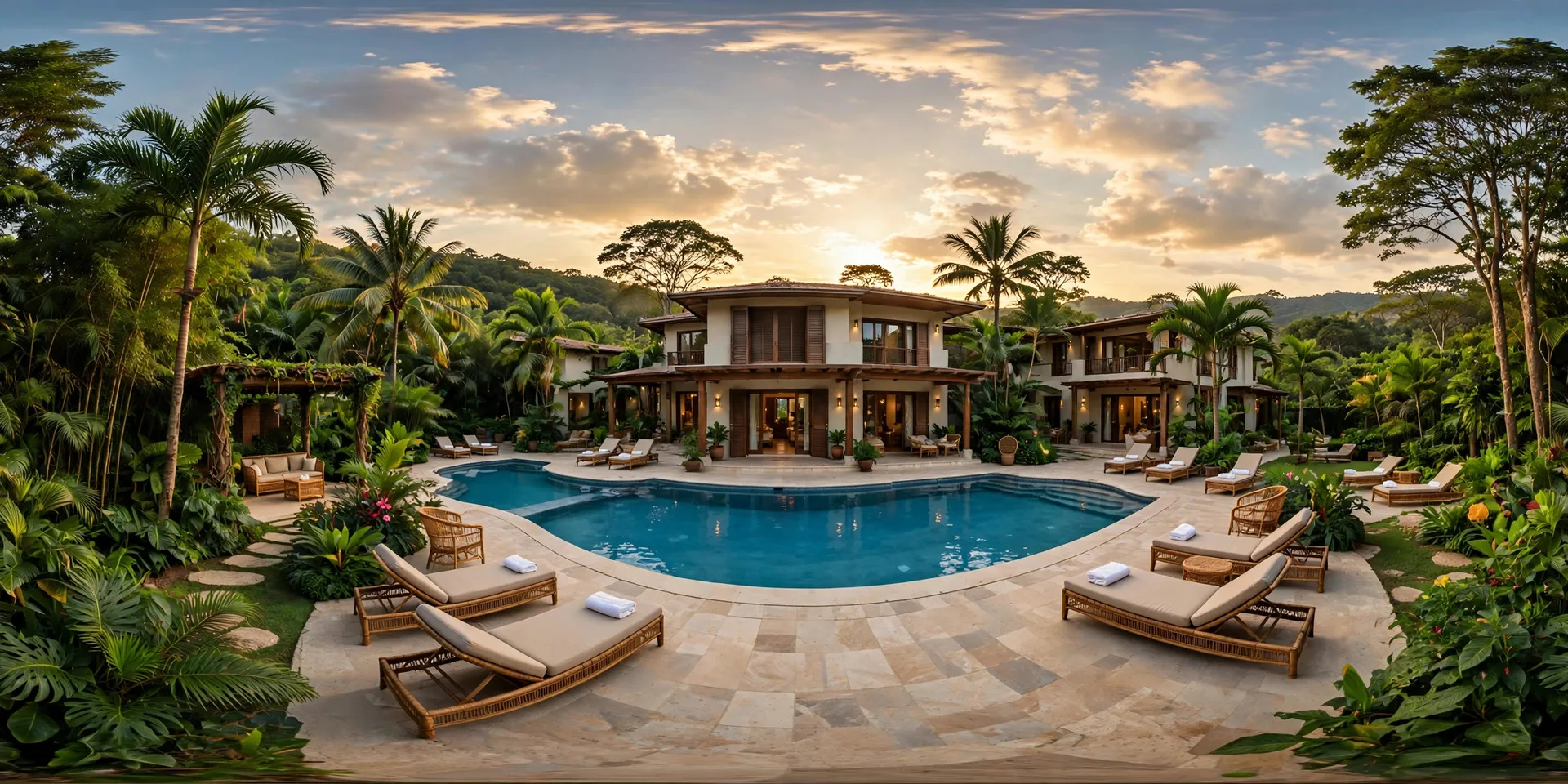
"How much does a 360 tour cost?" — the question I get most, and the hardest to answer with a single number. Because a 360 tour isn't a product with a price tag: a 4-space villa and a 30-room-category hotel both count as "a 360 tour", but the workload differs tenfold.
This article gives no fixed prices — every provider differs, and StayPano quotes based on your actual photo set. Instead, I'll break down the 5 factors that drive cost, the 3 quote models you'll meet in the market, and a 5-question checklist to ask before signing — so you can read any quote and understand what you're paying for.
5 factors behind 360 tour pricing
1. Number of panorama scenes
The biggest factor. Each scene is a space to process: checking photo quality, aligning panorama seams, optimizing file size for fast mobile loading. More scenes, more hours.
A 4–6 scene villa (lobby, 2 bedrooms, balcony, pool) is typical for whole-villa rentals. A hotel with many room categories can reach dozens of scenes — each category its own scene group. When comparing quotes, first count how many scenes the quote covers; don't compare headline totals.
2. Navigation and info hotspot count
As explained in our article on hotspots in 360 tours, hotspots turn a photo set into a journey. But every point costs work: navigation points must sit exactly at real doors and walkways in the photo; info points need copywriting plus attached photos or videos.
A 20-scene tour with only basic navigation differs completely from an 8-scene tour where every corner has info points, menu photos and a booking button. When reading a quote, ask: how many points of each type are included? Does info-point copywriting come included, or do you supply the text?
3. Interface and branding requirements
Default platform interface is fast. Custom logo, brand colors, custom welcome screen, custom domain — each adds design and development hours.
Customization usually follows real need: small homestays rarely need it; hotel chains or brand builders do. Don't pay for customization you won't use — but don't skip it either if the tour is part of the property's brand identity.
4. Add-ons: maps, video, multiple languages
Common extras: floor plans or scene locator maps, embedded video clips, a full Vietnamese–English version of all content. Each is its own workstream — bilingual translation and review, for instance, takes nearly as long as building scenes.
Tip: list what you truly need before requesting quotes. A tour for domestic provincial guests may not need English yet; a villa hosting Western guests should have it from day one — adding it later costs more than building it together.
5. Hosting and post-handover update fees
A 360 tour lives on the internet — and living on the internet has running costs: panorama image hosting (large files), domain, display platform. Some providers bundle the first year into the quote, others bill separately. Ask upfront so year two holds no surprises.
Same with updates: adding a new room category, changing prices in a menu photo, updating a phone number — who does it, and how is it charged? A tour isn't finished forever after launch; every property needs edits within months.
3 common quote models
You'll meet three pricing logics in the market. None is universally "right" — what matters is understanding the logic so you can compare:
1. Per scene. Unit price times number of spaces. Transparent and easy to estimate: count your rooms and areas, multiply. Fits clear requirements with little customization.
2. Tiered packages (basic / advanced). E.g. basic covers limited scenes plus navigation; advanced adds info points, bilingual content, custom interface. Easy to choose — but read what each tier actually includes; two providers can use the same tier names with very different scopes.
3. Whole-project fixed price. One price for everything from photos to finished tour, common for large or unusual projects. Convenient — no line-item math — but demands a detailed scope description before signing; anything outside scope gets charged extra.
Whichever model you meet, the comparison rule stays the same: normalize to identical scope — same scene count, same hotspot types, same customization level — then compare prices. Comparing headline totals across different scopes is meaningless.
5 questions to ask before commissioning
Save this checklist; ask any provider — the ones who answer clearly and precisely are more trustworthy than the ones who mumble:
1. Whose account hosts the tour? Does the platform account sit under your name or the provider's? This decides whether you truly own your tour, and what happens if you switch providers later.
2. How long is hosting covered? First year free or billed from day one? What's the annual fee from year two? Get specific numbers, not "we'll let you know later".
3. How are post-handover content updates charged? Adding/removing scenes, editing text, swapping photos — per request, per hour, or a maintenance plan? And what's the turnaround time?
4. Do I get admin rights? What can you edit yourself, and what needs the provider? More admin rights means more independence later.
5. What does the handover "backup" include? Original image files, project files, user guides? If one day you want to self-manage or switch providers, do you have the tools in hand?
These five are exactly what StayPano locks down in the handover scope before taking a job — see how we work on our hotel 360 tour service page.
Hidden costs people forget
Beyond the initial quote, watch for these three:
Annual platform and hosting fees. As covered above — a tour needs a home on the web, every year has a fee. Ask upfront; don't discover it at renewal.
Edits beyond the agreed feedback rounds. Typically 1–2 free revision rounds. A third round, or a mid-project change of direction, is usually billed extra. Avoid it: lock content (info-point copy, menu photos, phone numbers) before production starts instead of figuring it out mid-build.
Re-shoot fees if source photos fall short. Tours are built from existing 360 photos — but "existing" doesn't mean "good enough". Blurry images, misaligned panorama seams, missing key scenes mean re-shooting. Before signing, ask the provider to quality-check your photo set first (StayPano does this free), so you know upfront whether anything needs re-shooting.
FAQ
Is there a trial package? Depends on the provider. The most practical trial is building 1–2 scenes from your real photos to check quality before committing to a full tour — ask whether they support that.
How do staged payments usually work? Commonly a deposit to start, the balance on tour acceptance. Avoid paying 100% before seeing product — but don't expect zero deposit either; both sides need commitment.
Does the tour price include photo shooting? Important enough to answer directly: StayPano's service builds tours from your existing 360 photos; shooting is not included. If you already have a set, send it over for a free quality check. If you don't have photos yet, you'll need to shoot first (or hire a photographer separately) — building a tour from substandard photos wastes money, no matter how it's built.
Want to know what your tour would cost? Fastest way: send your existing 360 photo set via Zalo — I'll quality-check it free, count the usable scenes, then quote against your actual photos. No photos yet? Describe the property and I'll help estimate the scale.
💬 Send photos for a quote based on your real set
Read next: What are hotspots in a 360 tour? 5 interactive point types · What is a 360 tour? When homestays and hotels should get one