 Virtual tours for remarkable stays
StayPano · Insights & guides
360 tours for farmstays and eco retreats
How should farmstays and eco retreats do 360 tours? Showcasing wide outdoor spaces, walking paths and natural highlights.
360 tours for farmstays and eco retreats
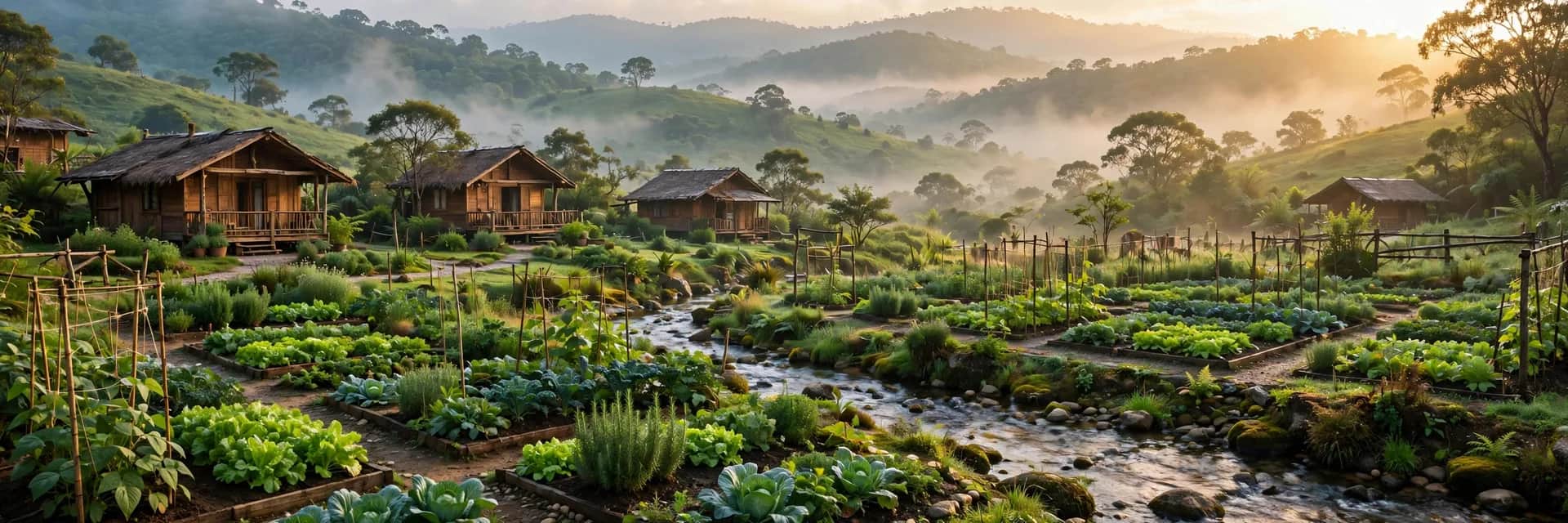
Farmstays sell what still photos sell worst: the feeling of space and nature. One photo can't show how big the garden is, how far the stream is from the house, what misty mornings look like. A 360 tour lets guests walk the farmstay themselves — and that "walking" is what sells it.
How farmstays differ from regular homestays
- Outdoors are the main character: gardens, hills, streams, fields — indoors are just for sleeping. Farmstay tours have the highest outdoor-scene ratio of any category.
- Paths are the experience: guests love following the dirt path from the house to the stream, through the vegetable garden. Navigation points along the real path recreate that journey.
- Nature changes by hour and season: the same garden corner looks completely different at dawn vs late afternoon. Noting shoot times in the tour helps guests picture accurately.
Must-have angles
1. Gate / access road. Attach: directions, distance from the nearest town, road difficulty (can a low car get in?) — practical info every farmstay guest needs.
2. Accommodation blocks. Each house/room: bedroom, bathroom. Attach: capacity, hot water availability (mandatory question for mountain farmstays).
3. Gardens / farm areas. Vegetable gardens, flower beds, livestock areas (if guests may visit). Attach: experience activities (picking vegetables, feeding chickens...).
4. Natural highlights. The stream, waterfall, pine hill, sunrise/sunset point — the reason guests pick your farmstay over another. Shoot carefully at the best hour.
5. Common area / shared kitchen. Campfire spots, communal dining. Attach: whether meals are served, meal prices.
6. Shared washrooms (if any). Many farmstays share bathrooms — shoot them clean and honest so guests arrive with right expectations.
Outdoor shooting technique
- Golden hours: early morning (6–8am) and late afternoon (4–6pm) give the best light; harsh midday sun burns images and hard shadows.
- Weather: avoid stormy days; lightly overcast days actually give softer, more even light than harsh sunshine.
- Outdoor navigation points: place them along real paths (turns, garden gates) so guests don't "teleport" between distant zones.
Weave story into the tour
Every farmstay has a story: how the organic garden is grown, where the stream comes from, who the host is. Info points are where these short stories live — at the vegetable garden: "500m² organic garden, guests may pick and cook." Stories build affection that plain photos can't.
How large is your farmstay, and what zones does it have? Send a map or a few flycam photos via Zalo — I'll advise scene counts and a sensible walking flow, free.
💬 Get advice on 360 tours for farmstays
Read next: 360 tour for homestays: the A–Z checklist · What's the best time of day to shoot 360 photos?